

Sunday, March 21, 2010


Friday, March 19, 2010
Is This a Fair Evaluation?
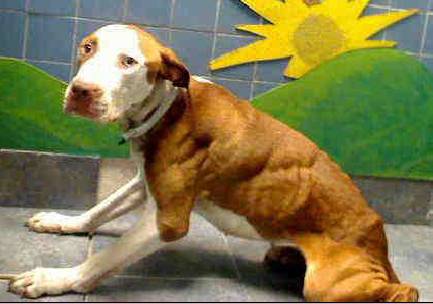
How would you expect a dog who looked like this to score in a shelter evaluation? To find out how this dog actually scored and what will happen to her as a result, click here.
Every shelter dog deserves a fair evaluation.
Thursday, March 18, 2010
Whose Side is Matthew Pepper on?
Reminder: This blog is now living at yesbiscuit.wordpress.com
***
***
The Memphis Animal Shelter killed around 13,000 pets in 2009. In 2010, they hired Matthew Pepper to take over the helm. I was thinking he was going to work toward reducing the killing at the shelter. Now I'm not so sure.
This week, the community gathered at a city council meeting to discuss a proposal regarding mandatory spay neuter. MSN supporters far outnumbered those opposed and Matthew Pepper was there. But he apparently did not speak out against the proposal, which would likely increase the killing at MAS:
Shelter director Matthew Pepper, who started his job this month, said that as a newcomer he was there to listen. He said whatever the fate of the ordinance, community-based programs that address responsible pet ownership will be needed.
He was there to listen to people proposing a bad law that would burden animal control, cause families to lose their pets, increase the intake at his shelter and increase the killing. This is not a "whatever the fate" tra-la-la-la-la issue. This is the time for the new director at MAS to take a stand and establish himself as a leader in Memphis with regard to decreased killing of the community's pets. Programs that address responsible pet ownership are good. MSN is not one of those.
Why is Matthew Pepper not speaking out against something that will lead to increased killing at MAS? Haven't the pets of Memphis suffered enough?
Pitbull Burned in NC Fire Available for Adoption
Reminder: This blog is now living at yesbiscuit.wordpress.com
***
***
A Mother in NC left 4 kids home alone 2 weeks ago with a Pitbull puppy in a crate. The house caught fire and firefighters were able to save a 4 year old and a 7 year old but were sadly too late to save the two babies in the home. A neighbor mentioned there was a dog inside and firefighters rescued her from the flames:
The 8-month-old pit bull suffered third-degree burns.
[...]
"All this is scarring," [veterinary technician Sandy] Gainey said, pointing to burns on the dog. "She was in pretty rough shape. Wherever you see no hair is where she was burned. And if you look at her ears, they're crinkled because of the burns and the scarring."
Gainey said that Phoenix could lose an ear because of the damage. Despite all the pain, Gainey said the dog is a sweetheart.
Local animal control has been caring for Phoenix but transferred her to another shelter for adoption since they are legally prohibited from adopting out Pitbulls. The 7 year old child has visited with the dog and will continue to do so after adoption. There is a video at the link of this dog's gentle demeanor while receiving veterinary care for what must be incredibly painful burns. She will make some new owner very happy I'm sure.
Thank you to the firefighters who saved her from a horrible death and to the local animal welfare community for making sure the dog will have a chance to be adopted.
Treats on the Internets
Reminder: This blog is now living at yesbiscuit.wordpress.com
***
***
This sounds like a pretty good dog
We all use stamps, even if we use them less frequently than we did in the before time - why not buy these?
Rescuers in Houston would like to take a dog at BARC to a veterinary specialist to see if her sight can be saved but BARC is refusing to release her
Austin is encouraging the community to get involved in achieving its no kill goals
Pets Alive is asking people to contact NY state politicians regarding the possible seizure of their land
Grace's Law, a proposal to end the use of the gas chamber in GA shelters, passes the House and heads to Senate
23 Pitbulls seized in Oakland, CA are owned by someone with a prior dogfighting conviction
Tuesday, March 16, 2010
I breakded it.
Update, 3-17: The new blog address is http://yesbiscuit.wordpress.com/
It's working (knock on wood).
***
I'm not an overly skilled computer geek but I can generally get around ok. Today, not so much apparently. In trying to address some problems I was having at the new blog, I seem to have kerplunk/kerplooey'd the whole damn thing. Unless some sort of blogmiracle befalls me, Ima hafta start over, maybe at a new address even. I will update this post with either:
A. News of the virgin birth
or
B. The address of the NEW new blog.
If anyone needs me I'll be in the woods screaming.
It's working (knock on wood).
***
I'm not an overly skilled computer geek but I can generally get around ok. Today, not so much apparently. In trying to address some problems I was having at the new blog, I seem to have kerplunk/kerplooey'd the whole damn thing. Unless some sort of blogmiracle befalls me, Ima hafta start over, maybe at a new address even. I will update this post with either:
A. News of the virgin birth
or
B. The address of the NEW new blog.
If anyone needs me I'll be in the woods screaming.
Monday, March 15, 2010
KY: Dog Warden Charged with Animal Cruelty
This video depicts a dog in obvious need of veterinary care (long overdue). It was allegedly shot inside the Webster County dog pound in KY. The conditions the surrounding dogs are living in are evident in the clip. After seeing the video and some photographs, the local TV station went to the pound with the KY state police. The dog warden, John Dunn, did not want the camera crew inside the pound and seemed to know who his friends in high places were right away:
Dunn: "You probably need to talk to the judge executive. Or the county attorney."
NEWS 25: "Okay, you can't tell us anything about those wounds on the dog, or the video that we saw?"
Dunn: "I'm not collaborating on none of it."
Good to know. The news crew pressed on:
The outside pens reek of urine and feces...we see it in the cages. Food and water bowls are too high for little dogs. One of the older dogs won't stop whimpering
NEWS 25: "You're saying there's nothing going on in here?"
Dunn: "No. I try to help every dog I can help. I mean I don't know who put this out on the Internet, that's just dirt. They're trying to pull up a lot of problems."
[...]
"People's getting real nosey, than what they should be. Because they don't know what goes on in this facility," Dunn says.
The judge executive never returned our call or acknowledged our request to go inside the pound.
Based on what the KY state police saw inside the pound, one count of animal cruelty - a misdemeanor in KY - was filed against the warden. And it seems he does indeed know who his friends are:
Judge Executive Townsend said that he has no plans to remove John Dunn as dog warden.
And in fact:
One day after NEWS 25 broke the story, we decided to head back to Webster County, to question the Judge Executive about the dog pound. Thursday, Kentucky State Police charged John Dunn, the county's dog warden, with animal cruelty. A day later, the Judge Executive told us it's all a mistake.
Judge Executive Jim Townsend stands by Dunn, calling him the best warden Webster County has ever seen.
The BFFs gave their side of the story to the local news:
"We need a new facility," Webster County Judge Executive Jim Townsend said. "We know that, but we just don't have the finances to do it."
The pound only has eight pens, and many are filled with several dogs.
Also, at the entrance to the facility, there are two large freezers holding dead animals.
"When you come into the door, the first thing you see is a freezer," Dunn said. "That is no good, I know that."
"That is a disturbing thing," Townsend said.
You know what else is disturbing? The Good Ol' Boys Club in the South. Just sayin'.
Compassionate members of the community are pooling resources to try and help the dogs at the pound.
Blog Moving
Update: 9am, 3-17-10: The new blog is up: http://yesbiscuit.wordpress.com/
***
Added: 4pm, 3-16-10: The new blog is currently down. My bad. Will update this post as soon as I figure the bugger out.
***
I'm doing that annoying thing bloggers sometimes do - moving my blog. I'll leave this one up as an archive source (although I have moved some of the posts to the new blog). To allow everyone time to update bookmarks and such, I'll crosspost everything to both blogs for the rest of the week. Starting next week, I'll be posting new stuff only at the new blog.
I don't have all the curtains up or doilies out at the new place yet but it's livable. Please feel welcome to let me know if you have any problems with or comments about the new blog.
Click the links above or copy and paste
http://yesbiscuit.com/wordpress/
into your browser.
***
Added: 4pm, 3-16-10: The new blog is currently down. My bad. Will update this post as soon as I figure the bugger out.
***
I'm doing that annoying thing bloggers sometimes do - moving my blog. I'll leave this one up as an archive source (although I have moved some of the posts to the new blog). To allow everyone time to update bookmarks and such, I'll crosspost everything to both blogs for the rest of the week. Starting next week, I'll be posting new stuff only at the new blog.
I don't have all the curtains up or doilies out at the new place yet but it's livable. Please feel welcome to let me know if you have any problems with or comments about the new blog.
Click the links above or copy and paste
http://yesbiscuit.com/wordpress/
into your browser.
More on Robeson Co Animal Shelter
There is another article in the local paper regarding allegations of cruelty at the Robeson Co Animal Shelter (RCAS). It's basically a he said/she said type deal with the shelter manager countering one eyewitness report with this handy retort:
“She did not witness anything. What she thinks she saw was not the truth.”
Beyond the back and forth, there are a couple of noteworthy items:
Robeson Co is paying for the HSUS to come down and evaluate the shelter. Part of the expense is being covered by a "grant" although the article doesn't give any details on that. It seems a shame that a shelter with less than a $400k annual budget would spend money on getting an evaluation from an organization that does not operate a single shelter. Since RCAS kills roughly 4000 of the 6000 pets they take in each year, I would think they'd want to spend their money on consultants who actually shelter and save pets. But what do I know?
The article ends with the county and Rachelle Dudgeon, a shelter critic, enthusiastically blaming the public for the killing:
One point the county and Dudgeon agree on unequivocally is that the shelter’s problems start with pet owners: “These animals wouldn’t even be in the shelter if people took care of them,” Dudgeon said.
County officials and animal rights advocates both emphasize the necessity of spaying and neutering animals and properly identifying them with collars and tags, which would reduce the number of animals that have to be euthanized.
“Everyone needs to understand that everything that is happening is preventable,” Dudgeon said.
There will always be pets in shelters. Pet owners become incapacitated/die, stray animals reproduce, etc. The idea that if everyone just did what I said, we'd have no need for shelters is fatally flawed.
Preventing unintentional breedings and putting ID on pets are fine ideas but those things are not going to stop the killing.
What is preventable is killing healthy/treatable pets. And you don't have to pay HSUS to tell you that.
Stolen Puppy for Sale?
Border Wars has a post about someone claiming to have stolen a mixed breed puppy and advertised her on Craigslist for $125. Although I have no way of verifying the story, I do hope police will look into the matter. If it is true that the pup was stolen, let's hope she is returned to her rightful owners and that police take the crime seriously. If it turns out to be a hoax, dude - not funny.
Sunday, March 14, 2010
PETA Continues Slaughtering Pets in 2009
PETA has roughly 187 employees in addition to interns and volunteers. The group has 2 million supporters. If we make the assumption that PETA is like most organizations who kill pets, we can assume that employees, interns, volunteers and supporters will, on occasion, save a pet from being killed by adopting that pet themselves. This is common practice and easily understandable - people who work with pets, even shelter staff who kill them, often have a fondness for them and keep pets themselves.
In 2009, PETA took in 2366 animals. Of those, they adopted out 8. That's a .34% adoption rate. I can't help wondering if, given the number of staff, interns and volunteers at PETA, they couldn't have adopted out more pets to themselves. It's not realistic to think every staffer could adopt a pet every year but it certainly seems like they could have found homes for more than 8 pets among their ranks. I wonder too if they could have appealed to their 2 million supporters for homes for these 2366 animals. Many killing "shelters" utilize their own websites, along with other online resources such as Petfinder, to try to find homes for the pets in their care. In this way, their potential reach is greatly expanded and they don't have to rely solely on staff or supporters to adopt the pets in their care. Where were these 2366 animals PETA took in listed? Or did they not even try to find homes for them?
As longtime PETA staffer Daphna Nachminovitch testified at the 2007 Piggly Wiggly dumpster trial:
The question that makes me sick: How does killing 97% of the animals in your care, apparently without even trying to find homes for them, jive with the phrase "ethical treatment of animals"? Killing healthy/treatable pets is not ethical. Duping the public to the tune of millions of dollars with the notion that your group helps animals is not ethical. Operating a pet slaughterhouse while filing as a tax-exempt charity organization is not ethical.
Pet friends don't let pet friends donate to PETA. Find your local no kill shelter and make a donation there instead. It's the ethical thing to do.
In 2009, PETA took in 2366 animals. Of those, they adopted out 8. That's a .34% adoption rate. I can't help wondering if, given the number of staff, interns and volunteers at PETA, they couldn't have adopted out more pets to themselves. It's not realistic to think every staffer could adopt a pet every year but it certainly seems like they could have found homes for more than 8 pets among their ranks. I wonder too if they could have appealed to their 2 million supporters for homes for these 2366 animals. Many killing "shelters" utilize their own websites, along with other online resources such as Petfinder, to try to find homes for the pets in their care. In this way, their potential reach is greatly expanded and they don't have to rely solely on staff or supporters to adopt the pets in their care. Where were these 2366 animals PETA took in listed? Or did they not even try to find homes for them?
As longtime PETA staffer Daphna Nachminovitch testified at the 2007 Piggly Wiggly dumpster trial:
"PETA does not maintain an animal shelter. PETA has a couple -- we call them 'quarantine rooms' -- which are used to house animals that are held for one reason or another. And animals who are, who have a chance for adoption, are usually fostered in private homes. We do not have a public facility that's open to the public where people can stroll through and pick an animal. That's not a service that we are able to provide. We're an office building."Did you ever hear anyone who supposedly cares about animals make pet adoption sound so dirty? "...[P]eople can stroll through and pick an animal" - eww, those filthy people who want to adopt pets. Look how they stroll though like they have some kind of right to save a pet. And then they pick an animal they want to care for and love. It makes me sick!
The question that makes me sick: How does killing 97% of the animals in your care, apparently without even trying to find homes for them, jive with the phrase "ethical treatment of animals"? Killing healthy/treatable pets is not ethical. Duping the public to the tune of millions of dollars with the notion that your group helps animals is not ethical. Operating a pet slaughterhouse while filing as a tax-exempt charity organization is not ethical.
Pet friends don't let pet friends donate to PETA. Find your local no kill shelter and make a donation there instead. It's the ethical thing to do.
Saturday, March 13, 2010
The Audacity of The Hope
From the home page of The Hope Sanctuary's website:
This "sanctuary" is in Barbados. I've never been to Barbados so I don't know if there is some kinda secret definition for sanctuary there but gee, this has got to be one of the worst fundraising pitches ever. What if I give them $5 or $500,000 and then they don't get enough from other donors to make up the $1 million needed? What happens to my money? Will it be used fund the killing of 125 dogs and cats?
OK I don't actually have $500,000 (take a check?) so here are some alternative suggestions:
"Crucifixion lasts hours. It's a slow, horrible death."
"Well, at least it gets you out in the open air."
We are about to be evicted from our premises. We need to fundraise and FAST.To paraphrase, give us a million bucks or we'll kill every last one of these pets.
We desperately need $1 million US to buy the Sanctuary before March 31st. If not and heaven forbid, we may have to put down all the dogs and cats we shelter. That's over 100 dogs and 25+ cats. Please pass this on to anyone and everyone - local and overseas. Anyone with any fundraising suggestions, solutions or investors/donators - PLEASE contact us[...]
This "sanctuary" is in Barbados. I've never been to Barbados so I don't know if there is some kinda secret definition for sanctuary there but gee, this has got to be one of the worst fundraising pitches ever. What if I give them $5 or $500,000 and then they don't get enough from other donors to make up the $1 million needed? What happens to my money? Will it be used fund the killing of 125 dogs and cats?
OK I don't actually have $500,000 (take a check?) so here are some alternative suggestions:
- Look for a place to house the 125 pets that costs less than a goddamn million dollars.
- Failing that, see if you can find permanent or foster homes for the pets. You can also network with other rescues to see who might be able to help.
"Crucifixion lasts hours. It's a slow, horrible death."
"Well, at least it gets you out in the open air."
Update on Spork Case
The owners of a Dachshund who bit a CO veterinary technician have been granted a 6 month deferred prosecution by a judge. So long as Spork doesn't bite anyone during the next 6 months, the charges will be dropped.
One of the many things I've learned from Cesar Millan would potentially be applicable in Spork's case: Hand little dogs off backwards. That is, when Person A is holding a little dog and wants to hand the dog over to Person B, Person A first turns the dog around so that his face is pointing towards Person A and away from Person B. This helps prevent the dog from being afraid when Person B invades his personal space and it removes any easy target (such as a face, in the Spork case), should the dog bite. Of course nothing beats a muzzle for preventing bites but it's always good to have additional tools in the toolbox.
One of the many things I've learned from Cesar Millan would potentially be applicable in Spork's case: Hand little dogs off backwards. That is, when Person A is holding a little dog and wants to hand the dog over to Person B, Person A first turns the dog around so that his face is pointing towards Person A and away from Person B. This helps prevent the dog from being afraid when Person B invades his personal space and it removes any easy target (such as a face, in the Spork case), should the dog bite. Of course nothing beats a muzzle for preventing bites but it's always good to have additional tools in the toolbox.
Memphis Animal Shelter News Bits
Matthew Pepper, the new director of the Memphis Animal Shelter (MAS), met with the Animal Services Advisory Board this week to discuss his plans for turning the shelter around. He will meet with them again next week:
On a related note, perhaps taxpayers are getting their money's worth from Mr. Pepper who is apparently not only a shelter director, but also a qualified behaviorist who can make a preliminary assessment of seized Pitbulls in the blink of an eye:
Pepper plans to join the Animal Services Advisory Board for a public discussion next Tuesday on the issue of spaying and neutering. The meeting is scheduled for March 16th at 4pm at Memphis City Hall.I sincerely hope Mr. Pepper will be speaking in favor of low/no cost spay neuter programs for Memphis and against the mandatory spay-neuter proposals on the table:
Councilman Shea Flinn is proposing an ordinance that would require all dogs and cats owned by Memphis residents to be altered, with several exemptions. The proposed law is in response to the overpopulation of animals in the city, which has led to a euthanasia rate in the Memphis Animal Shelter of more than 79 percent.Again, this meeting is open to the public and you may speak if you wish. MSN doesn't decrease shelter killing. Sometimes it increases the killing. Only comprehensive reform will reduce the killing in Memphis. And if Memphis is looking for funding for low/no cost neuter, look no further than your own backyard:
For months you've been paying three Memphis Animal Shelter employees to sit at home. All of them were suspended in the latest scandal at the facility.
Memphis taxpayer and attorney Bryan Mauldin doesn't understand why the three employees are still collecting a paycheck, while they're off the job. Mauldin says “Our shelter has limited resources and we can't afford to squander that money.”
On a related note, perhaps taxpayers are getting their money's worth from Mr. Pepper who is apparently not only a shelter director, but also a qualified behaviorist who can make a preliminary assessment of seized Pitbulls in the blink of an eye:
The 4 pitbulls seized from the active dog fight were impounded at the Memphis Animal Shelter Thursday night. Director Matthew Pepper says the condition of the dogs shows it wasn't their first fight and it's too early to tell what will happen to them."Some violent and aggressive tendencies have been ingrained in them so, it's difficult for us to determine what we can safely do with them," Pepper said.
Well you could start by getting the dogs a fair evaluation from an experienced group or individual. These dogs have been rescued and placed in your care MAS. Whatever they've been forced to do in the past is over. Do not judge them on the cruelty of their abusers. They are each individual dogs with needs and abilities all their own. Violence and aggression are not "ingrained" in them. Judge them with a kind eye, as you would any dog who's been rescued from abuse. Don't allow your judgment to be clouded by preconceived notions.
Mr. Pepper wants a chance to show he can turn around the MAS. I hope he gives these 4 dogs a chance too. Every dog deserves a fair evaluation.
Friday, March 12, 2010
Robeson Co Animal Shelter Inspections
The following info is snipped from state inspections of the Robeson Co Animal Shelter over the past two years. These snippets are summaries - not direct quotes. You can click the links to view the original reports (pdfs). My notes are in parentheses.
April 16, 2008 inspection: 108 enclosures with 54 dogs and 4 cats in the shelter. Cross contamination issues.
April 22, 2008 inspection: 108 enclosures with 33 dogs and 4 cats in the shelter. Pets need resting surfaces. Use large feed trays for resting surfaces if size appropriate.
May 15, 2008 inspection: 108 enclosures with 55 dogs and 15 cats in the shelter. Cross-contamination and resting surfaces issues remain.
August 25, 2008 inspection: 108 enclosures with 43 dogs and 19 cats in the shelter. All runs now have resting platforms. Cross-contamination issues. Sick/injured pets are not being treated or euthanized in a timely manner.
October 2, 2008 inspection: 108 enclosures with 43 dogs and 5 cats in the shelter. Sick pets being euthanized in a more timely manner than previously. (No mention made of sick pets receiving veterinary care.) Cross-contamination issues.
December 16, 2008 inspection: 108 enclosures with 24 dogs and 2 cats in the shelter. Cross-contamination issues.
(No inspection reports listed for 9 month period - were any performed?)
September 8, 2009 Euthanasia inspection report: Animals being killed without being checked for tattoos, identification or microchips first.
September 8, 2009 inspection: 108 enclosures with 27 dogs and 15 cats in the shelter. Awaiting new kennels to address cross-contamination issues.
November 17, 2009 Euthanasia inspection report: The shelter is converting their feed room into a euthanasia room.
November 17, 2009 inspection: 108 enclosures with 29 dogs and 1 cat in the shelter. New kennels have been installed and no issues of cross-contamination.
March 1, 2010 inspection: 108 enclosures with 75 dogs and 10 cats in the shelter. Shelter is using Ajax mixed with Clorox to clean kennels, resting boards and food/water bowls. The Ajax label says the product should not be mixed with chlorine bleach. Irritating fumes present in shelter. Dogs and inspector suffered from eye irritation and discomfort as a result.
March 9, 2010 inspection: 108 enclosures with 30 dogs and 10 cats in the shelter. No longer mixing Clorox and Ajax. Every animal now moved to a clean pen daily. Staff no longer cleaning with animals in cages. (The shelter manager, Jeff Bass, apparently provided the inspector with copies of e-mail complaints he received at this visit. The e-mails are not shown in the pdf. Mr. Bass refers to the e-mails in this letter: "[...]the messages continue to come like "chieu hoi” pamphlets falling from the sky in Vietnam".)
***
A few observations: At the time of the above inspections, the shelter was never at capacity. The population ranged from 26 to 85 pets during the time span. With 3 AC officers and 3 employees, I have to wonder why they are killing pets (without checking for chips/tattoos!) when there are empty cages at this facility. And yet:
I also wonder why there is no mention of getting veterinary care for sick/injured pets. Has the shelter tried to get veterinary care for their pets?
Mixing Ajax with bleach - duh. Even if your mama didn't tell you to never mix ammonia and bleach and you didn't bother to read the label on the bottle, you could always check the internets (search for "homemade bombs"). Didn't it burn the staff's eyes too?
At any rate, the inspection reports appear to corroborate at least some of the allegations made by eyewitnesses in various online postings about the shelter.
April 16, 2008 inspection: 108 enclosures with 54 dogs and 4 cats in the shelter. Cross contamination issues.
April 22, 2008 inspection: 108 enclosures with 33 dogs and 4 cats in the shelter. Pets need resting surfaces. Use large feed trays for resting surfaces if size appropriate.
May 15, 2008 inspection: 108 enclosures with 55 dogs and 15 cats in the shelter. Cross-contamination and resting surfaces issues remain.
August 25, 2008 inspection: 108 enclosures with 43 dogs and 19 cats in the shelter. All runs now have resting platforms. Cross-contamination issues. Sick/injured pets are not being treated or euthanized in a timely manner.
October 2, 2008 inspection: 108 enclosures with 43 dogs and 5 cats in the shelter. Sick pets being euthanized in a more timely manner than previously. (No mention made of sick pets receiving veterinary care.) Cross-contamination issues.
December 16, 2008 inspection: 108 enclosures with 24 dogs and 2 cats in the shelter. Cross-contamination issues.
(No inspection reports listed for 9 month period - were any performed?)
September 8, 2009 Euthanasia inspection report: Animals being killed without being checked for tattoos, identification or microchips first.
September 8, 2009 inspection: 108 enclosures with 27 dogs and 15 cats in the shelter. Awaiting new kennels to address cross-contamination issues.
November 17, 2009 Euthanasia inspection report: The shelter is converting their feed room into a euthanasia room.
November 17, 2009 inspection: 108 enclosures with 29 dogs and 1 cat in the shelter. New kennels have been installed and no issues of cross-contamination.
March 1, 2010 inspection: 108 enclosures with 75 dogs and 10 cats in the shelter. Shelter is using Ajax mixed with Clorox to clean kennels, resting boards and food/water bowls. The Ajax label says the product should not be mixed with chlorine bleach. Irritating fumes present in shelter. Dogs and inspector suffered from eye irritation and discomfort as a result.
March 9, 2010 inspection: 108 enclosures with 30 dogs and 10 cats in the shelter. No longer mixing Clorox and Ajax. Every animal now moved to a clean pen daily. Staff no longer cleaning with animals in cages. (The shelter manager, Jeff Bass, apparently provided the inspector with copies of e-mail complaints he received at this visit. The e-mails are not shown in the pdf. Mr. Bass refers to the e-mails in this letter: "[...]the messages continue to come like "chieu hoi” pamphlets falling from the sky in Vietnam".)
***
A few observations: At the time of the above inspections, the shelter was never at capacity. The population ranged from 26 to 85 pets during the time span. With 3 AC officers and 3 employees, I have to wonder why they are killing pets (without checking for chips/tattoos!) when there are empty cages at this facility. And yet:
Bass said that at one time, the shelter was putting down 90 to 95 percent of the animals that came through its doors because of too little space and too few adoptions.Where is this "too little space" issue? It's not evident to me from these inspection reports.
I also wonder why there is no mention of getting veterinary care for sick/injured pets. Has the shelter tried to get veterinary care for their pets?
Mixing Ajax with bleach - duh. Even if your mama didn't tell you to never mix ammonia and bleach and you didn't bother to read the label on the bottle, you could always check the internets (search for "homemade bombs"). Didn't it burn the staff's eyes too?
At any rate, the inspection reports appear to corroborate at least some of the allegations made by eyewitnesses in various online postings about the shelter.
WANTED: Common Sense in Emmetsburg, IA
The city codes in Emmetsburg, Iowa deem Pitbulls to be dangerous dogs. City residents Andrea and Jeremy Bowman have a dog in Emmetsburg who may be part Pitbull (the dog is a mixed breed and those breeds are in dispute). I want to make clear at this point there is no mention of allegations of biting or even growling at any person or animal by the dog.
The Bowmans, along with one of their neighbors, appeared before the city council this week to appeal the dangerous dog ordinance. The owners and neighbor stated the dog is friendly to people and other animals. However another of the Bowman's neighbors appeared to complain that the dog was seen running loose and had pottied on her lawn. (The owner admitted her kid had left the door open and the dog got out once.) So this neighbor who is unhappy about the dog pottying in her yard once schleps down to the council meeting to appeal for the dog to be kicked out of the city because she says, she fears for the safety of her 2 year old son and doesn't want to have to put up a fence to protect him. (I guess I should have warned readers of a Flying Logic Leap in advance, sorry about that.) I suppose that lady's 2 year old has never thrown a temper tantrum outside the home and caused a public disturbance. Because if he had, I'm sure she would have banished him from the city.
Again, the dog hasn't been accused of biting anyone and the owners have not been cited for anything. The principal of the Catholic school across the street from the Bowmans sent a letter of concern to the council. She too wants the dog ridden out on a rail. Not because he terrorizes kids at her school or anything like that but apparently because he's sucking up oxygen and stuff. (Which pets would Jesus ban?)
The council ordered the Bowmans to get a DNA test for their dog at their own expense. They have 30 days to comply.
There is another dangerous dog appeal detailed at the link involving a Drahthaar but my brain is too burned out to post about that one.
The Bowmans, along with one of their neighbors, appeared before the city council this week to appeal the dangerous dog ordinance. The owners and neighbor stated the dog is friendly to people and other animals. However another of the Bowman's neighbors appeared to complain that the dog was seen running loose and had pottied on her lawn. (The owner admitted her kid had left the door open and the dog got out once.) So this neighbor who is unhappy about the dog pottying in her yard once schleps down to the council meeting to appeal for the dog to be kicked out of the city because she says, she fears for the safety of her 2 year old son and doesn't want to have to put up a fence to protect him. (I guess I should have warned readers of a Flying Logic Leap in advance, sorry about that.) I suppose that lady's 2 year old has never thrown a temper tantrum outside the home and caused a public disturbance. Because if he had, I'm sure she would have banished him from the city.
Again, the dog hasn't been accused of biting anyone and the owners have not been cited for anything. The principal of the Catholic school across the street from the Bowmans sent a letter of concern to the council. She too wants the dog ridden out on a rail. Not because he terrorizes kids at her school or anything like that but apparently because he's sucking up oxygen and stuff. (Which pets would Jesus ban?)
The council ordered the Bowmans to get a DNA test for their dog at their own expense. They have 30 days to comply.
There is another dangerous dog appeal detailed at the link involving a Drahthaar but my brain is too burned out to post about that one.
Thursday, March 11, 2010
Treats on the Internets
City Council voted this morning to make Austin a no kill city!
NC Governor's Facebook page has received thousands of complaints regarding the Robeson Co Animal Shelter. Her office posted an intention to look into the complaints.
The Baltimore dog groomer who police had depicted as a "nurse" to dogs used in fights has had animal cruelty charges against her dropped. (H/T to Heather who predicted this scenario)
Kent Co Humane Society in MI fought the law and won on behalf of dogs seized in dogfighting case
Recent study finds a correlation between bitches who kept their ovaries for at least 6 years and longevity
Penguin in permanent Casual Friday attire
Squirrels get dressed for church
NC Governor's Facebook page has received thousands of complaints regarding the Robeson Co Animal Shelter. Her office posted an intention to look into the complaints.
The Baltimore dog groomer who police had depicted as a "nurse" to dogs used in fights has had animal cruelty charges against her dropped. (H/T to Heather who predicted this scenario)
Kent Co Humane Society in MI fought the law and won on behalf of dogs seized in dogfighting case
Recent study finds a correlation between bitches who kept their ovaries for at least 6 years and longevity
Penguin in permanent Casual Friday attire
Squirrels get dressed for church
Justifying Shelter Killing
Why do we kill pets in shelters? I no longer believe in the"too many pets, not enough homes" reasoning because the math does not add up. But I understand this is a point of contention for many who cling to the old thinking. I'm guilty of clinging sometimes myself so I understand. So let's say, for the sake of argument, it's true that we have too many pets and not enough homes. Don't ask me how the math would work on that scenario because I have no idea. (Anyone?) But let's just say it's true for pretend purposes.
So here we are at Our Beagle of Mercy Shelter in Southtown, USA and we've got too many pets and not enough homes for them all. We know there are many pet lovers in the Southtown area and that at least some of them will be looking for a new pet at any given time (first time pet owners, expanding the pet family, death of a pet, etc.) So the first thing I'm going to say to my shelter staff is "Be nice to people". While many people we meet are experienced pet owners who take good care of their pets, it's a given that within our community there will be some irresponsible pet owners just as there are irresponsible parents and irresponsible people in all walks of life. Unless these pet owners are sadistically cruel, we can hope to educate them on becoming responsible owners. But we will never educate anyone if we blame them for the community's pet problems. In order to address the "not enough homes" part of our problem, we do not want to do anything that compromises our good relationship with the people who will provide the homes we seek.
While we are being friendly to folks, we need to reach out to the community to get our foster pet and low cost spay-neuter programs going. We'll need volunteers from the veterinary community, donations and transportation volunteers from the public, and media promotion to spread awareness of the clinic. We know that the major obstacles standing in the way of getting more pets in the community neutered are education, cost and transportation. We're going to continually work to remove those obstacles so that everyone who wants to get his pet neutered can do so. Our community's feral cats will be trapped, neutered and returned to their living areas. We'll continually seek foster homes for pets from the community. All of this will help us with the "too many pets" part of our problem.
In addition to our efforts in the community, we are going to extend our reach by utilizing social media such as Twitter. We'll also be networking online with shelters and rescues in other parts of the country because not all of them are going to have the same "too many pets, not enough homes" problem we have. We may be able to arrange for some of our pets to go to areas where there are fewer pets in need of homes.
Our website will feature adoptable pets as well as strays who are pending redemption. We'll keep our shelter doors open during the hours we know the public is most likely to visit, including weekends. Because we take good care of the animals we shelter, the public will see clean kennels and pets who have been adequately fed, watered and exercised. Sick pets will receive veterinary care so they can be adopted and medically hopeless pets who are suffering will be euthanized.
I know by now skeptics are thinking, "All this fancy no kill talk sounds good but meanwhile there are pets piling up in your shelter and you've got to do something with them". Right. And we will, but it's not going to be killing. Never that. Instead, we are going to shelter them - not warehouse them, not dump them in unscreened homes or rescues - really and actually and truly shelter them. Because Our Beagle of Mercy is an animal shelter, that's what we do. In fact, that's what the public has a right to expect and demand from every shelter in this country - sheltering of the community's pets. Anything less is a crime.
So here we are at Our Beagle of Mercy Shelter in Southtown, USA and we've got too many pets and not enough homes for them all. We know there are many pet lovers in the Southtown area and that at least some of them will be looking for a new pet at any given time (first time pet owners, expanding the pet family, death of a pet, etc.) So the first thing I'm going to say to my shelter staff is "Be nice to people". While many people we meet are experienced pet owners who take good care of their pets, it's a given that within our community there will be some irresponsible pet owners just as there are irresponsible parents and irresponsible people in all walks of life. Unless these pet owners are sadistically cruel, we can hope to educate them on becoming responsible owners. But we will never educate anyone if we blame them for the community's pet problems. In order to address the "not enough homes" part of our problem, we do not want to do anything that compromises our good relationship with the people who will provide the homes we seek.
While we are being friendly to folks, we need to reach out to the community to get our foster pet and low cost spay-neuter programs going. We'll need volunteers from the veterinary community, donations and transportation volunteers from the public, and media promotion to spread awareness of the clinic. We know that the major obstacles standing in the way of getting more pets in the community neutered are education, cost and transportation. We're going to continually work to remove those obstacles so that everyone who wants to get his pet neutered can do so. Our community's feral cats will be trapped, neutered and returned to their living areas. We'll continually seek foster homes for pets from the community. All of this will help us with the "too many pets" part of our problem.
In addition to our efforts in the community, we are going to extend our reach by utilizing social media such as Twitter. We'll also be networking online with shelters and rescues in other parts of the country because not all of them are going to have the same "too many pets, not enough homes" problem we have. We may be able to arrange for some of our pets to go to areas where there are fewer pets in need of homes.
Our website will feature adoptable pets as well as strays who are pending redemption. We'll keep our shelter doors open during the hours we know the public is most likely to visit, including weekends. Because we take good care of the animals we shelter, the public will see clean kennels and pets who have been adequately fed, watered and exercised. Sick pets will receive veterinary care so they can be adopted and medically hopeless pets who are suffering will be euthanized.
I know by now skeptics are thinking, "All this fancy no kill talk sounds good but meanwhile there are pets piling up in your shelter and you've got to do something with them". Right. And we will, but it's not going to be killing. Never that. Instead, we are going to shelter them - not warehouse them, not dump them in unscreened homes or rescues - really and actually and truly shelter them. Because Our Beagle of Mercy is an animal shelter, that's what we do. In fact, that's what the public has a right to expect and demand from every shelter in this country - sheltering of the community's pets. Anything less is a crime.
Wednesday, March 10, 2010
Action Alert for Austin Pet Lovers
You are invited:
When: 10am Thursday, March 11, 2010
Where: City Hall in the Council Chambers (301 W. Second St in downtown Austin)
What: The city council will vote on adopting a plan to make Austin a no kill city.
Why: The city shelter currently kills pets even when they have space for them. Sometimes they kill them just because they're young. The community does not want this happening in their city.
Attend the meeting tomorrow to show your support for saving Austin's homeless pets. Additional info here.
When: 10am Thursday, March 11, 2010
Where: City Hall in the Council Chambers (301 W. Second St in downtown Austin)
What: The city council will vote on adopting a plan to make Austin a no kill city.
Why: The city shelter currently kills pets even when they have space for them. Sometimes they kill them just because they're young. The community does not want this happening in their city.
Attend the meeting tomorrow to show your support for saving Austin's homeless pets. Additional info here.
What's Going on at the Robeson Co Animal Shelter in NC?
An online search turns up countless stories of neglect, cruelty and killings alleged to have taken place at Robeson County Animal Shelter in NC. As with all things posted on the net, you have to judge for yourself what seems credible to you. Stories include:
How about it Robeson County - could the shelter make itself more transparent to the public so that the community doesn't have to rely on internet postings for information on how the shelter cares for pets?
Note: There are numerous posts circulating indicating that ABC News is looking for eyewitness accounts for a story they are doing on the Robeson Co shelter. The posts provide the contact information for someone at ABC. I have contacted the person listed and she does not wish her name and contact info to be posted any further so please do not post it in the comments.
- 1997 video of pets being cruelly killed by shelter workers (Warning - graphic)
- After the lawsuit which followed the video, the shelter reportedly changed its ways. This posting details a 2010 eyewitness account indicating the shelter has not changed and is still inflicting unnecessary cruelty in the killing of pets.
- 2010 video depicting 73 empty kennels (out of 100) at the shelter yet a dog with a rescue waiting to pull her was killed
- Another lawsuit is currently being considered against the county by the same complainant as the previous case alleging similar acts of cruelty and neglect by the shelter.
There are three animal control officers and three employees at the shelter — with some contract assistance — who take care of the animal needs of a human population of nearly 130,000 people in the largest county in the state. They are typically stressed and stretched. By and large, they remain conscientious of their duty to the residents and the animals. The constant probing and prodding take away any satisfaction in the job.While the opposing sides are far apart, I'm sure most everyone will agree that working towards continued improvement is a worthwhile effort. I wonder if the shelter could make its practices more transparent to the public and thus reduce the perceived "probing and prodding" referred to in the letter. Public shelters should be accountable to the public to my mind. If there was more transparency in the sheltering world, it would go a long way toward reassuring the community that pets are being well cared for which is the main concern I think.
Is it perfect? Absolutely not. It is good though, it adheres to all standards and licensure requirements, but it could be better. We continue to move toward that goal.
How about it Robeson County - could the shelter make itself more transparent to the public so that the community doesn't have to rely on internet postings for information on how the shelter cares for pets?
Note: There are numerous posts circulating indicating that ABC News is looking for eyewitness accounts for a story they are doing on the Robeson Co shelter. The posts provide the contact information for someone at ABC. I have contacted the person listed and she does not wish her name and contact info to be posted any further so please do not post it in the comments.
Tuesday, March 9, 2010
Two Pitbulls Rescued in Arkansas
I just love these nutjobs who are all anti-government until they want clean drinking water or a road to drive on or a way to get across a river besides swimming. And who do they call when their barn goes up in flames? The government, of course:
[William] Stewart's criminal activities were first discovered by White County authorities when they responded to a fire at a barn on his property Thursday night. After the smoke dissipated, they say they discovered evidence of dog fighting, two boa constrictors, more than 100 marijuana plants each worth $1,000, a trailer dubbed "The Romance Club," nearly 40 loaded weapons and anti-government pamphlets.William Stewart was reportedly known in dogfighting circles as "Rushin' Bill" and published a dogfighting magazine called The Pitbull Reporter for many years.
Deputies Thursday found a pit bull fighting ring, two dogs and enough chains for 40 more.The two dogs were saved.
[...]
Deputies say all the weapons were loaded proving Stewart was ready to defend his property, but they say he killed himself before there was any confrontation.
Monday, March 8, 2010
Must See TV
I can announce after watching this video that it is indeed possible to tear up while tapping your toes to a Monkees tune and smiling at pictures of happy pets.
Case Update: Walker Co Humane Society in AL
Brett Wadsworth, the attorney representing Boost's owner against the Walker County Humane Society (you might remember that the shelter killed Boost immediately upon admission and then lied about it), says that last week, the shelter made the owner an offer of $2000. They are refusing the offer and pursuing their lawsuit.
Good on them.
You can read all the posts on this case here.
Good on them.
You can read all the posts on this case here.
"I know what the caged bird feels"
In this terrible economy, I'm inclined to feel sympathy for anyone who gets evicted from his home and has to move to another city. He's obviously not moving by choice and who knows why he was evicted - maybe he just fell on hard times financially.
In the case of someone who has 7 Pitbulls (a male, a female and a litter of 5 pups), that's going to be a tough situation. I can't think of many landlords who would be eager to accept a tenant who's bringing along a reproducing pair of Pitbulls and their current offspring. In fact, I'd wager many friends and relatives would feel the same way. In a case like this, networking online, reaching out to local rescues and placing ads in area papers to place the dogs might all be options. And if nothing works out, there is always your local shelter. This is what animal shelters are for. But a NJ man by the name of Keifan Thomas had a different idea when he was faced with these circumstances this Winter.
Mr. Thomas packed up the plantation and chained his adult male dog to the fence, stuffed the dam into a small metal cage and let the puppies roam around the trash in the yard. In Winter. In New Jersey. Three weeks later, a neighboring business called animal control who picked up the dogs. The dam was, of course, dead in her cage. The other dogs survived and were adopted at the shelter. That's the good news.
Mr. Thomas pleaded guilty to 4 counts of animal cruelty and received - can you guess? - a suspended jail sentence. On the plus side, he did receive a substantial fine. An AC officer noted that “Mr. Thomas appeared to be sympathetic” - Right. I'm guessing he sympathized with himself for getting caught and for having to pay a fine. It's hard to imagine him having any sympathy for the dogs, which is like the whole point. I assume he'll be getting another dog (or dogs) sometime soon since the article makes no mention of Mr. Thomas being barred from owning pets.
The AC officer said he hopes Mr. Thomas has learned a lesson. I hope so too and I like to think everyone deserves a second chance blah blah blah. It's hard though. Stuffing the dam into a little metal cage in freezing temperatures - that would be cruel if he'd done it for an hour. He did it until that poor dog died. She suffered while her puppies ambled through trash around her cage, probably crying for their mama. I can imagine the male, alert barking until he was hoarse, chained to the fence. It's a real stretch to think of someone who would do that to his own pets being in any way "sympathetic".
Sympathy
In the case of someone who has 7 Pitbulls (a male, a female and a litter of 5 pups), that's going to be a tough situation. I can't think of many landlords who would be eager to accept a tenant who's bringing along a reproducing pair of Pitbulls and their current offspring. In fact, I'd wager many friends and relatives would feel the same way. In a case like this, networking online, reaching out to local rescues and placing ads in area papers to place the dogs might all be options. And if nothing works out, there is always your local shelter. This is what animal shelters are for. But a NJ man by the name of Keifan Thomas had a different idea when he was faced with these circumstances this Winter.
Mr. Thomas packed up the plantation and chained his adult male dog to the fence, stuffed the dam into a small metal cage and let the puppies roam around the trash in the yard. In Winter. In New Jersey. Three weeks later, a neighboring business called animal control who picked up the dogs. The dam was, of course, dead in her cage. The other dogs survived and were adopted at the shelter. That's the good news.
Mr. Thomas pleaded guilty to 4 counts of animal cruelty and received - can you guess? - a suspended jail sentence. On the plus side, he did receive a substantial fine. An AC officer noted that “Mr. Thomas appeared to be sympathetic” - Right. I'm guessing he sympathized with himself for getting caught and for having to pay a fine. It's hard to imagine him having any sympathy for the dogs, which is like the whole point. I assume he'll be getting another dog (or dogs) sometime soon since the article makes no mention of Mr. Thomas being barred from owning pets.
The AC officer said he hopes Mr. Thomas has learned a lesson. I hope so too and I like to think everyone deserves a second chance blah blah blah. It's hard though. Stuffing the dam into a little metal cage in freezing temperatures - that would be cruel if he'd done it for an hour. He did it until that poor dog died. She suffered while her puppies ambled through trash around her cage, probably crying for their mama. I can imagine the male, alert barking until he was hoarse, chained to the fence. It's a real stretch to think of someone who would do that to his own pets being in any way "sympathetic".
Sympathy
I know what the caged bird feels.
Ah me, when the sun is bright on the upland slopes,
when the wind blows soft through the springing grass
and the river floats like a sheet of glass,
when the first bird sings and the first bud ops,
and the faint perfume from its chalice steals.
I know what the caged bird feels.
I know why the caged bird beats his wing
till its blood is red on the cruel bars,
for he must fly back to his perch and cling
when he fain would be on the bow aswing.
And the blood still throbs in the old, old scars
and they pulse again with a keener sting.
I know why he beats his wing.
I know why the caged bird sings.
Ah, me, when its wings are bruised and its bosom sore.
It beats its bars and would be free.
It's not a carol of joy or glee,
but a prayer that it sends from its heart's deep core,
a plea that upward to heaven it flings.
I know why the caged bird sings.
Cause of Death in Lee Co, SC Dog Attack
A follow up on the 65 year old woman in SC who died during a dog attack last week:
The woman died of a heart attack. The husband, who was attacked first, remains in the hospital. The dog was killed following the attack.
Lee County Coroner Alford Elmore told The Item of Sumter that an autopsy Friday showed that Ethel Horton had an enlarged heart and died before the dog did much damage to her.
The woman died of a heart attack. The husband, who was attacked first, remains in the hospital. The dog was killed following the attack.
Deadliest Animals to Humans
I was watching a show yesterday with Dave Salmoni interacting with crocodiles in Africa. He mentioned that despite the widely perceived threat to humans in Africa from crocs (unless you're a pregnant woman defending your man, that is), they are not responsible for the largest number of human deaths by animal attack in Africa per year. That animal, per Salmoni, is the hippopotamus. (Eek - I may have to change my Christmas list.) That was surprising to me since I've never really thought of hippos as anything but laid back, mud wallowers. And it got me wondering what animal was responsible for the most human deaths each year worldwide.
The answer to that turns out to be the mosquito. The World Health Organization says a child dies of malaria (after being bitten by an infected mosquito) every 30 seconds. An estimated 2 million people die from malaria every year. In the U.S., we are not at risk for contracting malaria via mosquitoes. We do see a number of deaths every year in the U.S. from animals such as bees and wasps and indirectly, from deer who run in front of cars and cause accidents.
The answer to that turns out to be the mosquito. The World Health Organization says a child dies of malaria (after being bitten by an infected mosquito) every 30 seconds. An estimated 2 million people die from malaria every year. In the U.S., we are not at risk for contracting malaria via mosquitoes. We do see a number of deaths every year in the U.S. from animals such as bees and wasps and indirectly, from deer who run in front of cars and cause accidents.
Saturday, March 6, 2010
Update on 2008 Dogfighting Bust in Harris Co, TX
You may remember in 2008 when the Houston SPCA "rescued" and then killed 187 unevaluated dogs in a massive dogfighting bust. The Hair Balls blog in Houston has an update on the legal cases against those arrested in connection with the case:
Someone remind me what was the whole point of this 17 month investigation and bust. Because it obviously wasn't to prosecute dogfighters or save the victims of the abuse. From where I stand, it seems like the main objective was to kill a bunch of dogs. Success! Congratulations Harris County. You must be so proud.
[C]ourt records filed in Harris County show that -- even though much of the dog fighting was caught on videotape and witnessed by law enforcement officers -- prosecutors doled out light sentences because, in most instances, the defendants were spectators, and were not witnessed entering dogs in fights. (Participants in dog fights can face up to two years in prison; spectators can get a year in jail and a $4,000 fine).Well I guess we'll chalk that one up as a FAIL. And we can toss it on the pile of 187 dog carcasses left to rot in a landfill after Houston SPCA killed them without even having them evaluated.
But in some of those cases, even defendants who officers witnessed entering dogs into fights had their charges dropped -- like William Stanforth, who was indicted on three charges of felony dog fighting, only to have two charges dismissed and receive deferred adjudication for the third. And then there's Albert Ramirez, who a grand jury said "unlawfully, intentionally and knowingly cause a dog to fight with another dog" in October 2008, and whose case was dismissed a month later.
Others who were sentenced to time in Harris County Jail were allowed to serve during off-work hours; some of those who were charged were never even arrested. Some had criminal records, like a man who was sentenced to 20 days for being a spectator, and who had previous convictions of assault of a family member, felony weapon possession, burglary of a vehicle, and auto theft.
[...]
On March 6, 2009, Darrick Ford was convicted on two separate charges of misdemeanor dog fighting -- he was a spectator -- and received a two day sentence for each. He also received a two-day credit for each. So things worked out well for Ford.
Ford got off much easier than Urias Contreras, who was sentenced to four whole days on one charge. Contreras was originally charged with felony dog fighting -- meaning he actually caused one dog to fight with another -- but the prosecutor lowered the charge to a misdemeanor.
[...]
[Animal Cruelty Prosecutor Belinda] Smith, who called the 2008 sting the biggest undercover operation in the country, has been vocal about her determination to bring dog fighters to justice. [emphasis added]
Someone remind me what was the whole point of this 17 month investigation and bust. Because it obviously wasn't to prosecute dogfighters or save the victims of the abuse. From where I stand, it seems like the main objective was to kill a bunch of dogs. Success! Congratulations Harris County. You must be so proud.
Adopting Emily

This is the story of how I adopted my dog Emily several years ago. I am intentionally leaving out the name of the shelter where I adopted her because this was my one and only dealing with this shelter and may not have been typical. Since they didn't kill a dog or anything even close, I want to give them the benefit of the doubt.
When I was looking for a little dog, I had been laid off from my job and was having no luck in finding a new one. Billy and I agreed we would visit area shelters until we found a good match (sometimes I went alone since he was at work). The first dog we found was at my favorite no kill shelter, the Animal Protection League. The lady who introduced us to the little white female mixed breed was up front about some major medical issues the dog was dealing with which I really appreciated. We left saying we'd get back to her about the dog. I went home and began researching online. Ultimately, we decided against taking on a dog with these issues since there was the possibility, as with any dog, that the future held more, unknown medical problems and after all, I was out of work. I didn't think we could commit to the necessary veterinary expenses for this dog. We let the shelter know and they were very nice about it. I still remember that dog and think of her and how I had left lipstick on her white head.
The second dog I picked out was at a kill shelter. When I told the receptionist which dog I had chosen, she said that dog was on a potential hold for someone else. She said she'd call me and let me know if the adopter decided to take the dog. She did call me eventually, but by that time I had adopted Emily. I still remember that dog and wonder what happened to him.
I was searching online for shelters when I came across the website which led me to Emily. Although I didn't see her listed on the shelter's site, they did list a very reasonable adoption fee of $75 which included neuter, vaccines and heartworm testing. In addition, the site indicated that some dogs who had been at the shelter for a long time were half-price! I was definitely excited about that. I didn't know if I would find a dog there or if I did, whether that dog would be one of the half-price ones, but I figured I'd give it a whirl.
When I arived at the shelter, I went to the front desk and my eye was immediately drawn to an x-pen full of little dogs behind the desk. I'm sure my face lit up but the receptionist must have seen the gleam in my eye and told me immediately that all of those dogs were adopted. I remember wondering why a shelter would keep a bunch of already adopted dogs in an x-pen behind the counter. It seems like if they were the staff's personal pets, she would have just said that but I don't know. At any rate, after I explained I was looking for a small dog, she thought of one that was available and asked someone to bring her out to me. That was Emily.
I spent a long getting-to-know-you time in their spacious lobby area with Emily, most of which she spent having a nap on my lap. While I was there, a lady came in with her kid to redeem her lost Dachshund. The receptionist refused to return the dog to the owner without spaying her first. The owner eventually broke down in tears and the small child was obviously upset. I didn't like any of that and I got a bad feeling.
I called Billy to tell him about Emily and he agreed we should adopt her. I was given an application form and the receptionist asked me questions about how I took care of my other dogs which made me feel better. That's when she dropped the bomb: No, Emily was not a half-price dog, she wasn't even regular price - her adoption fee was double! For the second time that visit, the receptionist accurately read my facial expression without me even saying a word. I was shocked. I admit it would have been great to pay a reduced fee but I had gone in there willing to pay the regular, full fee if necessary. But double? WTF? She explained that they charge more for little dogs. For reals. Needless to say, had they disclosed this on the website, I may have decided not to go there or if I did, at least I would have been prepared. I felt they had lured me in to the shelter by promising me I could adopt a dog for $35 or $75 and then when I got there, jacked up the price to $150. Do. Not. Like.
Before the deal fell through though, the receptionist unleashed her most excellent salesman tactics. First she offered to take payments - $50 a month on my credit card that I would leave on file with them. Then to seal the deal, she appealed to my independent ego. Noticing that I had called Billy earlier, she asked, "Do you need to call someone to see if paying the fee is ok?". Oh hell no, I don't need to call anyone! I am a strong independent woman who makes my own decisions and takes responsibility for my own finances! I demand that you take my credit card immediately and put through the first payment!
Yeah, she got me. But in the end, we got Emily. So I can't really feel too bad about the whole thing. But honestly, I highly doubt I'll ever go back there to adopt another pet nor have I ever recommended the place to anyone. So I have to wonder if it was really worth it to them to get the extra $75 out of me when all was said and done. As I said in the beginning of this post, maybe this isn't the way they typically do business. But the incident with the Dachshund owner combined with my own experience just left a bad taste in my mouth.
By the way, the shelter ended up trying to charge my card an extra time after the fee was paid off. I complained to the bank who asked them for proof of authorization. They didn't provide a response and so the bank credited me the extra $50 charge. Not the capper to this story I wanted.
Do you have any experiences - positive or negative - to share about adopting from a shelter or rescue? I'd like to hear them.
Good News: More Large Mixed Breed Pups Now Available!
I come across postings regularly on various internet sites listing puppies in need of homes. On occasion, I pick one out to share. In this one, I have changed the breeds to breeds of similar size to protect the innocent (dogs):
Using my brilliant powers of deduction, I take it that we have a dog breeder here. With the limited information contained in the post, I can only trace the lineage 3 generations but it looks like the Newfoundland was bred to a a dog who was something other than a Newfoundland and at least one female puppy from the resulting litter was kept by the breeder. That Newf mix puppy was bred to a Chow/Lab mix and the breeder is unable to keep the pups because the dam and grandam eat too much.
I don't know if these breedings were intentional or if the breeder considers them accidents but if they were not intentional, one wonders why more effective protocols were not introduced to prevent accidental breedings somewhere along the way. If they were intentional, one wonders what the purpose of the breedings is. (Yes, you must have a purpose in dog breeding!) Most of the common reasons for planned breedings that come to my mind seem to obviously not fit here: Profit, supply dogs for a competition or utilitarian function, supply a waiting list of owners with puppies, create a new breed, allow the kids to experience the birth of a litter one time, etc. I honestly can't think of a purpose for these breedings. Maybe there is one and it just isn't striking me at the moment. I think it's reasonable to assume that if the breeder fails to find homes for the pups, she won't be keeping them (that eating thing is a strong indicator). My hope is that these pups will find homes and will not end up at a shelter where they have a good chance of being killed.
The post does not indicate if this breeder is screening homes in order to protect the pups. Nor if she will offer support to the new owner for the life of the dog and be willing to take the puppy back or help with rehoming if that circumstance arises at some point in the dog's life. I hope that she simply forgot to state these things because, accidental or intentional, she is the breeder and that's a breeder's obligation. Oh and as for the feeding thing and the fact that big dogs eat a lot of food - yeah, that's a breeder's obligation too.
***
Search for low/no cost spay-neuter services in your area at the ASPCA website.
Hi!! I have three puppies that are ready for new homes. There is one boy and two girls. Their mama is a Newfoundland mix and the daddy is a Chow/Lab mix. These are very beautiful babies, and they are the sweetest things in the world. I would keep them but I have to feed their mama and her mama, which is the Newfoundland and they eat alot.
Using my brilliant powers of deduction, I take it that we have a dog breeder here. With the limited information contained in the post, I can only trace the lineage 3 generations but it looks like the Newfoundland was bred to a a dog who was something other than a Newfoundland and at least one female puppy from the resulting litter was kept by the breeder. That Newf mix puppy was bred to a Chow/Lab mix and the breeder is unable to keep the pups because the dam and grandam eat too much.
I don't know if these breedings were intentional or if the breeder considers them accidents but if they were not intentional, one wonders why more effective protocols were not introduced to prevent accidental breedings somewhere along the way. If they were intentional, one wonders what the purpose of the breedings is. (Yes, you must have a purpose in dog breeding!) Most of the common reasons for planned breedings that come to my mind seem to obviously not fit here: Profit, supply dogs for a competition or utilitarian function, supply a waiting list of owners with puppies, create a new breed, allow the kids to experience the birth of a litter one time, etc. I honestly can't think of a purpose for these breedings. Maybe there is one and it just isn't striking me at the moment. I think it's reasonable to assume that if the breeder fails to find homes for the pups, she won't be keeping them (that eating thing is a strong indicator). My hope is that these pups will find homes and will not end up at a shelter where they have a good chance of being killed.
The post does not indicate if this breeder is screening homes in order to protect the pups. Nor if she will offer support to the new owner for the life of the dog and be willing to take the puppy back or help with rehoming if that circumstance arises at some point in the dog's life. I hope that she simply forgot to state these things because, accidental or intentional, she is the breeder and that's a breeder's obligation. Oh and as for the feeding thing and the fact that big dogs eat a lot of food - yeah, that's a breeder's obligation too.
***
Search for low/no cost spay-neuter services in your area at the ASPCA website.
Friday, March 5, 2010
SC Pitbull News
Tragedy: A 65 year old Lee Co woman who was feeding a relative's chained dogs got attacked and killed by one of them - a Pitbull. The other chained dogs in the yard were Beagles and Huskies.
***
A TV station in Charlotte, NC (close to York Co, SC) did an investigative piece on chained Pitbulls and their living conditions in York Co. Video included:
***
***
A TV station in Charlotte, NC (close to York Co, SC) did an investigative piece on chained Pitbulls and their living conditions in York Co. Video included:
[A] reported owner of seven pits, was charged with assault and battery today after attacking our news photographer. We discovered that 27-year-old Eric Martin has a record that includes a criminal domestic violence charge. When we broadcast this story, he was being held at the York County jail with no bond because of an outstanding warrant from another law agency.
***
Sad news on most of the dogs seized in the recent York Co dogfighting case:
Eleven of the 13 dogs deputies found in February near a pit used to fight dogs have been euthanized for humane reasons, said Dr. Sonya McCathey, a veterinarian with York County Animal Control.The other two dogs were released to a rescue group, she said.
***
Finally, some very good news on the Pitbulls dumped by a breeder at a Greenville kill shelter:
Less than a week after a U-Haul truck dumped more than 20 pit bulls at the Greenville County Animal Care Services shelter, the dogs have found new homes.
Shelter manager Shelly Simmons said more than 21 families came in after the story ran on WYFF News 4 and WYFF4.com on Monday.
"We had many other inquiries ... over the phone and we've had several rescue agencies come forward and say that they'll take what doesn't get adopted," Simmons said.
NC: Owner Tries to Redeem Pets, Animal Control Shrugs
Two family pets got out of their yard through a hole in the fence last week in North Carolina. Charlotte-Mecklenburg Animal Care and Control picked them up and told the owner he needed to fix the fence before he could take his dogs home. Since it was raining, it took the owner a couple of days to get the repairs done. Once completed, the owner showed up to redeem his Pitbulls but the shelter had killed them. AC characterizes killing the dogs as "a mistake".
Make that two mistakes.
Mistakes happen. When you're in the business of killing pets, your mistakes are going to involve oops killings. This is one of the many reasons I oppose kill shelters. At any rate, here is the thing that pushed me over the edge: AC staff reportedly said to the owner by way of explanation, "No one knows what happened". Now I am willing to grant that killing the first dog was a mistake. And even that killing the second dog was a mistake. But no one knows what happened? That's no mistake. And it's inexcusable.
I think even an outsider such as a myself can put together a reasonable start to determining what happened in about 30 seconds. I would think the paid staff at AC could do at least a little better than what I can come up with but here goes:
Make that two mistakes.
Mistakes happen. When you're in the business of killing pets, your mistakes are going to involve oops killings. This is one of the many reasons I oppose kill shelters. At any rate, here is the thing that pushed me over the edge: AC staff reportedly said to the owner by way of explanation, "No one knows what happened". Now I am willing to grant that killing the first dog was a mistake. And even that killing the second dog was a mistake. But no one knows what happened? That's no mistake. And it's inexcusable.
I think even an outsider such as a myself can put together a reasonable start to determining what happened in about 30 seconds. I would think the paid staff at AC could do at least a little better than what I can come up with but here goes:
- How many people are authorized at your shelter to kill dogs?
- Of those, who was working on the days the dogs were being held?
- Who, if anyone, normally assists in killing dogs at your shelter and of those, who was at work on the days in question?
Now, [Will] Harlee [the dogs' owner] says Animal Care and Control needs to be held accountable for its mistake, and he still has questions without answers."I need to know why and who," he said. "I want somebody to lose their job over this. I need an impression that this can't happen to anybody else."
I would take it a step further and say the community needs to be reassured that in fact, the shelter knows what is going on under its own roof. Otherwise, what are taxpayers paying for?
Animal Care and Control says it's working on better communication.Are we talking smoke signals and carrier pigeons or what? It really isn't that hard to find out how these two dogs were killed. If nothing else, the AC supervisor could jump up on the counter and yell out, "Raise your hand if you killed 2 Pitbulls recently!". That should get the ball rolling.
Subscribe to:
Posts (Atom)


 Posts
Posts


